Sale
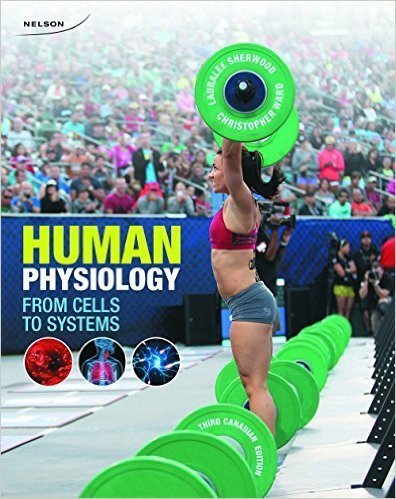
Human Physiology From Cells To Systems 3rd Edition by Lauralee Sherwood – Test Bank
chapter 1
| Indicate whether the statement is true or false. |
| 1. All cells are capable of reproducing.a. Trueb. False |
| 2. Blood is a type of connective tissue.a. Trueb. False |
| 3. The skin is part of the integumentary system.a. Trueb. False |
| 4. Stem cells are not common to all multicellular organisms.a. Trueb. False |
| 5. Cells eliminate carbon dioxide as a waste product.a. Trueb. False |
| 6. The concentration of salt in the extracellular fluid influences how water enters and leaves cells.a. Trueb. False |
| 7. The endocrine system functions with the circulatory system for the transport of hormones.a. Trueb. False |
| 8. All proteins are enzymes.a. Trueb. False |
| 9. Homeostatic control systems are grouped into two classes: intrinsic and extrinsic controls.a. Trueb. False |
| 10. With positive feedback, a control system’s input and output continue to enhance each other.a. Trueb. False |
| 11. Exocrine glands are the only structures in the body capable of secretion.a. Trueb. False |
| 12. Secretion refers to the release from a cell, in response to appropriate stimulation, of specific products that have, in large part, been synthesized by the cell.a. Trueb. False |
| 13. Feedforward mechanisms bring about a response in reaction to a change in a regulated variable.a. Trueb. False |
| 14. Intestine, heart, and skin do not consist of hormone-secreting cells.a. Trueb. False |
| 15. Glands are formed during embryonic development by pockets of epithelial tissue that dip inward from the surface.a. True |
Bestsellers
Sale
Sale
Sale
Sale
Sale
Sale
Sale

Reviews
There are no reviews yet.